


Views: 0 Author: Site Editor Publish Time: 2025-08-01 Origin: Site


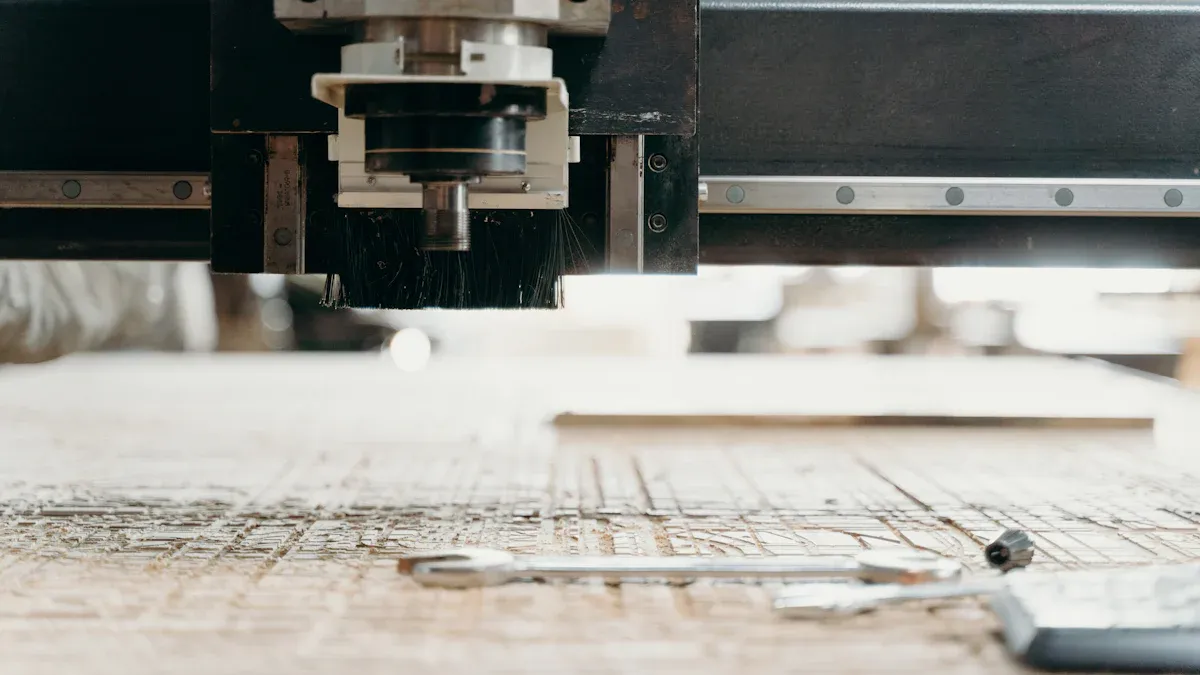
When you use a cnc router, the right bits are important. These cnc router bits cut, carve, and engrave wood by spinning fast. This helps you make smooth edges and clear details. Choosing the best router bits is important. Bad choices can make rough cuts or break your tools. Many woodworkers have problems like making sure cnc router bits fit their machine. They also need to find strong bits and use the right settings for each router.
Bit life changes how much you spend.
Using the right bits for your cnc router saves time.
Good router bits help you work better and stay safe.
Pick the right CNC router bits for your wood and project. This helps you get smooth cuts and keeps your tools safe.
Use different bit shapes like flat-end, ball nose, and V-bits. These shapes help you make different cuts, details, and fancy edges.
Take care of your bits by cleaning and checking them often. This keeps them sharp and helps them last longer.
Choose the right bit size and material, like carbide for hardwoods. This makes your cuts better and your tools last longer.
Always follow safety rules like holding your wood tight and wearing safety gear. This helps you stay safe when using your CNC router.
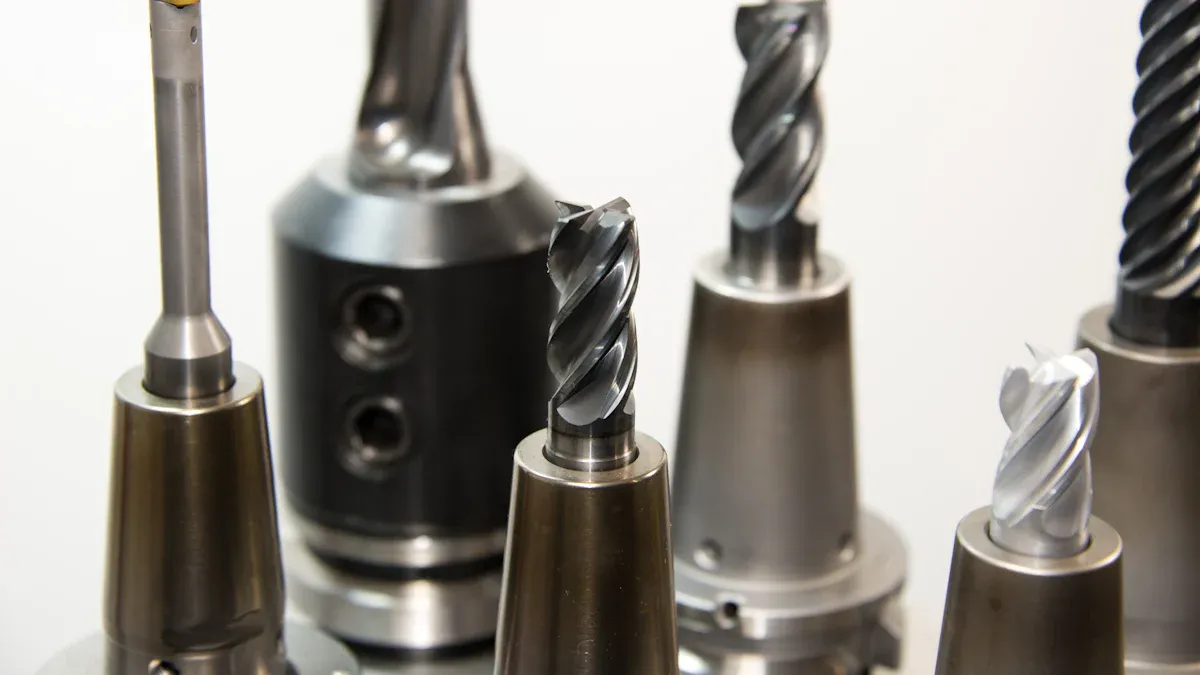
When you use a cnc router, you rely on sharp cnc router bits to shape wood with accuracy. These bits spin at high speeds. The cutting edges shear wood fibers, making clean cuts. You control the cnc router with a computer. The machine moves the bits along the x, y, and z axes. This lets you carve, engrave, or cut wood in any direction you need.
The design of cnc router cutters helps you get the best results. Flutes on the bits remove wood chips quickly. This keeps your work area clean and prevents clogging. You can choose different bit shapes, like spiral or straight, to match your project. The right cnc router tools help you avoid rough edges and get smooth finishes.
Tip: Always secure your wood and check your cnc router tools before starting. Stable tools and workpieces give you better results.
Here is how cnc router bits interact with wood:
The bits spin fast and cut into the wood.
Flutes carry away chips so the cut stays clean.
You pick bit shapes based on the type of wood and the cut you want.
The cnc router follows your programmed path for precise cuts.
Stable tools and the right speed keep your cuts accurate.
CNC router bits stand out from regular router bits. You do not see bearing guides on cnc router cutters. Instead, these tools use solid cutting profiles. This design gives you more control and precision with your cnc router.
CNC router tools also use special materials and coatings. Many bits have carbide tips or solid carbide bodies. Some have coatings like Diamond-Like Carbon (DLC) or Titanium Nitride (TiN). These features make your tools last longer and cut better. You can run your cnc router at higher speeds without wearing out your bits quickly.
The shank size of your cnc router cutters matters, too. Most cnc router bits come in 1/4 inch or 1/2 inch shanks. Larger shanks reduce vibration and help you get smoother cuts. Spiral flute designs help remove chips and keep your edges clean.
| Design Feature | Benefit for CNC Router Tools |
|---|---|
| No bearing guides | More precise, computer-controlled cuts |
| Carbide materials | Longer tool life, better performance |
| Special coatings | Less friction, higher speed, improved durability |
| Spiral flutes | Efficient chip removal, cleaner edges |
| Larger shank sizes | Less vibration, more stable cuts |
You can choose from many types of cnc router bits for woodworking. Here are some main categories:
Flat bottom bits for surfacing and engraving
Ball nose bits for smooth, curved carving
Tapered ball nose bits for detailed relief work
Drill bits for straight holes
Up-cut, down-cut, and compression bits for different chip removal needs
CNC router tools give you the power to create detailed, accurate wood projects. The right cnc router cutters and bits make your work easier and your results better.
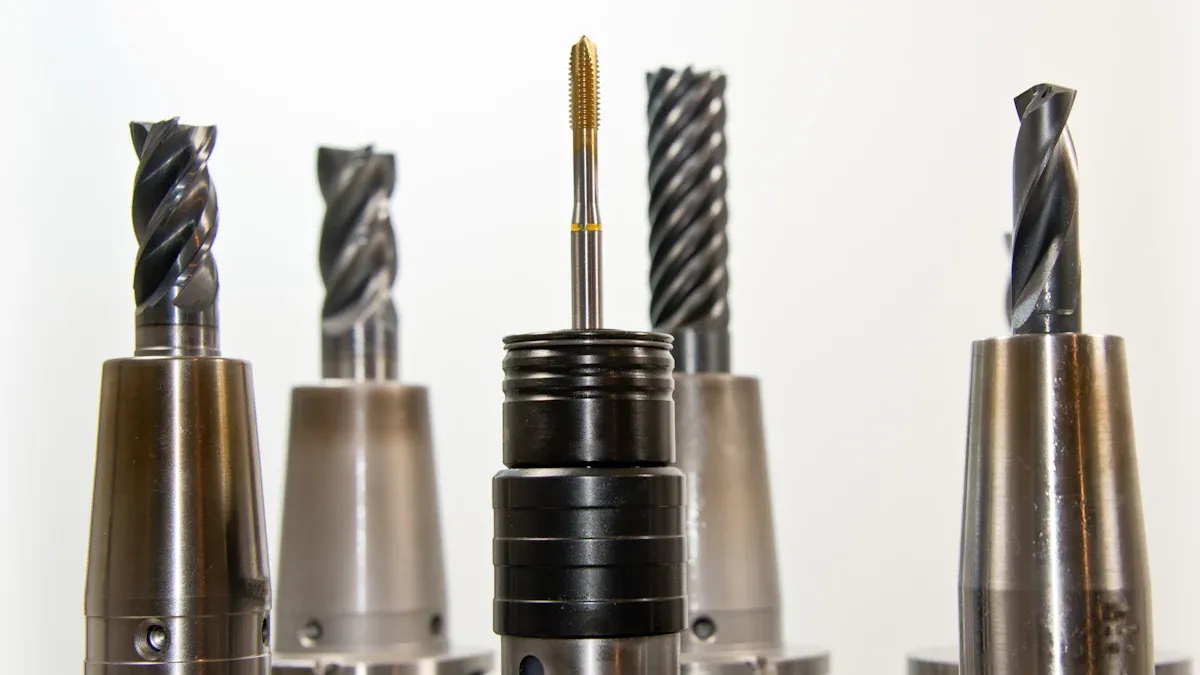
When you work with a cnc router, you need to know the different types of router bits. Each bit has a special job. Some bits cut straight lines, while others carve curves or make detailed designs. Choosing the right router bit types helps you get the best results from your cnc router tools. Let’s look at the main types of cnc router cutters and what they do.
Flat-end and end mill bits are some of the most common cnc router bits for woodworking. You use these bits for general cutting, milling, grooving, and engraving. Flat-end bits have a straight cutting edge. They make flat-bottomed cuts and are great for removing large amounts of wood quickly. End mill bits come in different sizes, usually 1/4" or 1/8" diameters. You can use them for shelf pegs, hinge pockets, or even detailed engraving.
Flat-end bits have different flute counts. More flutes mean a smoother finish and faster cutting, but less space for chips.
The shank diameter and cutting diameter affect how stable the bit is. A thicker shank gives you less vibration and more accuracy.
Shorter cutting lengths give you better control and a smoother surface. Longer bits reach deeper but can vibrate more.
Center cutting end mills let you plunge straight down into the wood, which is useful for slotting or pocketing.
Tip: Use four-flute carbide end mills for flat areas and channels. They cut faster and leave a smooth finish.
V-bits and profile bits help you add detail and decoration to your wood projects. V-bits have a pointed tip and come in angles like 30°, 60°, or 90°. You use v-bits for engraving, sign-making, and creating V-shaped grooves. These bits make sharp, clean lines and are perfect for cnc engraving bits.
Profile bits come in many shapes, such as Roman ogee, roundover, and cove. You use these bits to shape the edges of furniture, doors, and frames. Profile bits give your work a finished, elegant look.
V-bits are best for sign-making, chamfers, and detailed inlays.
Profile bits create decorative edges and add style to your projects.
Ball nose bits have a rounded tip. You use these bits for 3D carving, contouring, and sculpting. Ball nose bits move smoothly over curves and rounded surfaces. They reduce tool marks and give you a clean, polished finish. Tapered ball nose bits are even better for deep or narrow areas because they are stronger and less likely to bend.
Carbide ball nose bits last longer and stay sharp. They also handle heat better, so you can cut faster without damaging the wood. Ball nose bits are a must for detailed 3D work, like relief carvings or wood sculptures.
Ball nose bits are best for 3D work like sculpting or carving designs with smooth curves.
Upcut, downcut, and compression bits control how chips move and how clean your edges look. Each type works best for certain jobs.
Upcut bits pull chips up and out of the cut. They keep the bottom edge clean but can leave a rough top. Use them for deep pockets, mortises, and fast roughing.
Downcut bits push chips down. They keep the top edge smooth and reduce tear-out. These bits work well for thin materials, plywood, and laminates.
Compression bits combine both actions. The tip pulls chips up, and the upper part pushes them down. This gives you clean edges on both the top and bottom. Compression bits are great for plywood, melamine, and double-sided veneers.
| Bit Type | Chip Removal Direction | Edge Finish Characteristics | Additional Notes |
|---|---|---|---|
| Upcut | Pulls chips upward | Clean bottom edge; rough top edge | Good for deep cuts and fast chip removal. |
| Downcut | Pushes chips downward | Clean top edge; possible tear-out at bottom | Best for thin materials and top surface finish. |
| Compression | Upcut at tip, downcut at shank | Clean edges on both top and bottom surfaces | Ideal for plywood and laminates; splinter-free results. |
Specialty cnc router bits help you with unique tasks. These bits include cove, core box, spoilboard surfacing, rabbeting, flush trim, and edge forming bits. Each one has a special shape or feature for a specific job.
| Specialty CNC Router Bit | Unique Function / Purpose |
|---|---|
| Cove Router Bit | Makes semi-circular decorative edges. |
| Core Box Router Bit | Cuts rounded grooves for fluting or channels. |
| Spoilboard Surfacing Bit | Flattens large surfaces quickly, like a face mill. |
| Rabbeting Router Bit | Cuts shoulders or rabbets for joinery. |
| Flush Trim Router Bit | Trims edges flush with another surface, guided by a bearing. |
| Edge Forming Router Bit | Creates decorative edges such as round-overs and coves. |
| Chipbreaker Router Bit | Breaks chips into small pieces for fast roughing. |
| V-Bit Router Engraving Bit | Engraves detailed patterns and text. |
| CNC Drag Knife | Cuts thin materials by dragging a blade. |
| Diamond Cut Router Bit | Finishes composites and layered materials gently. |
You can also find cnc drill bits for making straight holes and cnc milling bits for shaping and cutting. These tools expand what you can do with your cnc router.
Note: Always match the router bit types to your project. The right cnc router cutters and cnc router tools make your work easier and your results better.
When you start with a cnc router, you want a set of bits that covers most basic woodworking tasks. You do not need every type at first. A small collection helps you learn how each bit works and what results you can expect.
Here are some good starter bits for your cnc router:
1/4" and 1/8" flat-end mill bits for cutting and pocketing.
60° and 90° v-bits for engraving and sign-making.
1/4" ball nose bit for smooth 3D carving.
1/4" upcut and downcut spiral bits for clean edges on different surfaces.
You should check that the shank size matches your router collet. Most hobby cnc routers use 1/4" shanks. Using the right shank size keeps your bits stable and reduces vibration. This helps you get better quality cuts and protects your tools.
Tip: Start with carbide bits. They last longer and stay sharp, even if you use your cnc router often.
Different woods need different router bits. The hardness and grain of the wood change how your cnc router cuts. You want to match your bits to the wood for the best results and longer tool life.
Straight grain woods like maple and walnut are easier to route. You get fewer chips and less tear-out. Use bits that work well with consistent fiber direction.
Interlocking or irregular grain woods, such as mahogany, can be tricky. The grain changes direction, so you need to slow down and pick bits that handle these changes.
Hardwoods like oak, maple, and walnut are dense. They wear out your bits faster. Choose sharp, durable bits and slow your feed rate to avoid damage.
Softwoods like pine and cedar cut easily but can leave fuzzy edges. Pick bits that reduce tear-out and give you a clean finish.
Knots in wood are very hard. They can damage your bits. Use strong, wear-resistant bits when you expect to hit knots.
| Wood Type | Bit Choice & Tips |
|---|---|
| Straight grain (maple) | Standard spiral or straight bits for smooth cuts |
| Irregular grain (mahogany) | Slower speeds, sharp bits, careful passes |
| Hardwoods (oak, walnut) | Carbide bits, slower feed, frequent checks for wear |
| Softwoods (pine, cedar) | Downcut bits to reduce fuzz, sharp edges |
| Woods with knots | Robust, wear-resistant bits, avoid aggressive cuts |
You should also watch for heat buildup. Dense woods create more friction. This can dull your bits quickly. Clean your bits often and replace them when you see signs of wear.
If your project needs fine detail, you must pick the right bits. The shape, size, and tip of the bit all matter. For crisp lines and smooth textures, use bits designed for detail work.
A tapered ball nose bit with a fine tip works well for intricate designs. The broad taper and sharp point help you avoid tip deflection. This means your cuts stay sharp, and you do not get soft edges. You can use these bits on many types of wood and even on composite materials.
Use smaller diameter bits for tiny details and tight corners.
Choose bits with fine tips and specific angles for engraving and texture.
Keep your router speed steady and use light pressure for the best quality.
Clean your bits after each project. Resin and debris can build up and affect your results.
Secure your workpiece firmly. Movement can ruin detailed cuts.
Note: Using a variety of bit shapes and sizes lets you add depth and texture to your woodworking. Try different bits to see what works best for your project.
If you want professional-quality results, pay attention to bit maintenance. Sharp, clean bits give you smoother finishes and reduce sanding time. Always check your bits before starting a new project.
When you choose cnc router bits, you need to match the bit to your wood and project. The size and type of bit matter. Small bits like 1/8" work well for fine details. Larger bits, such as 1/4" or 1/2", handle big cuts and harder woods. Straight bits help with simple cuts and edge shaping. Profile bits add decorative edges. Cove bits create rounded edges, and dovetail bits help with joinery. V-groove bits make decorative lines. Picking the right bit size and type helps you get the best quality and efficiency for your project.
The material of your router bits also affects your results. Carbide bits last longer and stay sharp, making them great for hardwoods and detailed work. High-speed steel (HSS) bits cost less and work for softwoods and simple tasks. Carbide bits resist heat and keep their edge, so you get clean, precise cuts. HSS bits dull faster and need more sharpening. Use carbide bits for tough jobs and HSS bits for lighter work.
| Aspect | Carbide Bits | HSS Bits |
|---|---|---|
| Durability | Highly durable, stays sharp longer | Dulls faster, needs more sharpening |
| Cutting Precision | Clean, precise cuts | Less precise as they dull |
| Best Use | Hardwoods, complex designs | Softwoods, simple cuts |
| Cost | Higher, but lasts longer | Lower, but replaced more often |
You need to care for your router bits to keep your cnc router running well. Clean your bits after each use to remove wood dust and resin. Set a schedule to check your bits for wear. Watch for signs like rough cuts, chipped edges, or cracks. If you hear strange sounds or see dullness, it is time to replace the bit. Sharpening helps, but if it does not improve performance, get a new bit.
Follow these steps to extend the life of your tools:
Clean bits regularly to remove buildup.
Lubricate moving parts to reduce friction.
Check machine alignment to prevent uneven wear.
Track how long you use each bit.
Inspect bits for chips, cracks, or dullness.
Store bits in a dry place to avoid rust.
Tip: Replace bits if you notice poor cut quality, increased resistance, or visible damage.
Safety comes first when you use a cnc router. Always wear safety glasses and hearing protection. Secure your workpiece with clamps so it does not move. Inspect your bits before each job. Replace any worn or damaged bits. Keep your workspace clean and free of clutter.
Follow these safety steps every time:
Read your cnc router manual before use.
Wear PPE like goggles, ear muffs, and a dust mask.
Remove jewelry and avoid loose clothing.
Use non-slip shoes.
Make sure the router is off before plugging it in.
Never leave the router running unattended.
Keep hands at least six inches from moving bits.
Use the right bit for your task and make sure it is secure.
Adjust speed and feed rate for your material.
Shut down the router if you notice any problems.
Note: Proper training and regular maintenance help you stay safe and get the best performance from your cnc router and tools.
Understanding cnc router bits helps you get better results with your cnc projects. When you know which router bits to use, you can choose the right tool for each job. This means cleaner cuts, less damage, and more creative designs.
V-groove bits let you engrave fine details.
Ball nose bits shape smooth 3D surfaces.
Slot cutters and round over bits help with joinery and edges.
Try different router bits and settings on your cnc router. Share your favorite tips or stories in the comments!
You can use a soft brush and a bit of rubbing alcohol. Remove wood dust and resin after each use. Dry the bits before storing them. Clean bits last longer and cut better.
Look for dull edges, chipped tips, or rough cuts. If you hear strange noises or see burning marks, replace the bit. Sharp bits give you smoother results and protect your machine.
No, you should match the bit to the wood type. Hardwoods need strong, sharp bits. Softwoods work best with bits that reduce fuzz. Using the right bit helps you get clean cuts.
Check the manufacturer's guide for speed settings. Use slower speeds for harder woods and faster speeds for softwoods. Adjust speed if you see burning or rough edges.
Yes, use v-bits or engraving bits for fine details. These bits have sharp points and specific angles. They help you create crisp lines and clear designs in your wood projects.


