


Views: 0 Author: Site Editor Publish Time: 2026-08-24 Origin: Site


Jade processing requires careful control at every stage because jade is a valuable, hard, and visually sensitive material. From rough stone preparation to detailed carving, manufacturers need equipment that balances cutting accuracy, surface quality, production efficiency, and material utilization. Modern CNC technology has changed jade processing by making complex shapes, fine engraving details, and repeatable production easier to achieve.
This guide explains the main jade processing methods, how different machines are used, and what factors buyers should consider when selecting equipment. It also explains how a Jade Wire Cutting Machine fits into modern jade manufacturing workflows.
| Processing Stage | Main Purpose | Common Equipment |
|---|---|---|
| Rough Cutting | Separate and shape raw jade blocks | Wire cutting equipment and stone cutting machines |
| Surface Shaping | Create basic forms and dimensions | CNC cutting and carving machines |
| Detailed Carving | Produce patterns, textures, and artistic details | 3-axis and 4-axis engraving machines |
| Finishing | Improve appearance and surface quality | Polishing and manual finishing processes |
Jade processing usually begins with selecting suitable raw materials and continues through cutting, shaping, engraving, and finishing. Each step influences the final value of the product because errors during early processing can cause unnecessary material loss.
Before machining, jade pieces need to be evaluated for size, shape, internal characteristics, and intended application. Unlike common industrial materials, jade products often depend on preserving natural patterns and minimizing waste. The processing plan should consider where cuts will be made and how much material can be retained.
Cutting is one of the most important stages because it determines the basic shape of the jade piece. A suitable cutting method should provide stable movement, controlled cutting force, and accurate positioning.
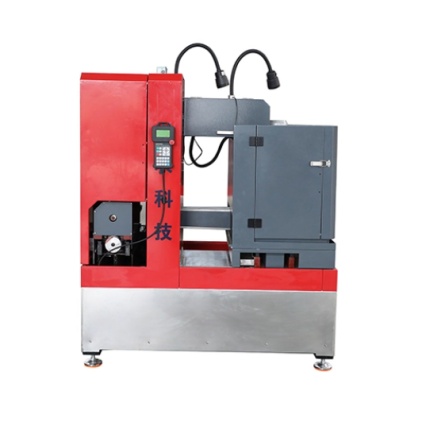
A Jade Wire Cutting Machine is commonly used for applications requiring controlled cutting paths and reduced material loss. Wire cutting technology allows operators to create precise cuts while maintaining better control over valuable stone materials. For production environments, cutting accuracy and machine stability directly affect yield and processing costs.
After the basic shape is prepared, carving equipment creates decorative patterns, relief structures, or three-dimensional designs. CNC engraving machines allow manufacturers to reproduce detailed designs with consistent results.
For detailed jade artwork, a 3-Axis Jade Engraving Machine can support multi-directional processing for complex engraving tasks. When designs require additional rotational movement, a 4-Axis Jade Carving Machine provides more flexibility for curved surfaces and advanced carving applications.
Wire cutting is designed for controlled separation and shaping of hard materials. Compared with traditional cutting approaches, it can provide a narrower cutting path and help reduce unnecessary material removal.
When selecting a wire cutting system for jade, buyers should evaluate:
Positioning accuracy and repeatability
Machine rigidity during continuous operation
Cooling system performance
Compatibility with different jade sizes
Ease of operation and maintenance
CNC engraving improves consistency when producing repeated designs or detailed artistic patterns. Important features include stable mechanical structures, reliable control systems, suitable spindle performance, and appropriate axis movement.
For example, the YH60-35 Jade Engraving Machine is designed for precision processing across materials including jade, stone, wood, acrylic, aluminum, and copper. Its three-axis structure, water-cooled spindle, and breakpoint recovery function support stable operation in small to medium-scale production environments.
Choosing equipment depends on the type of products being produced, production volume, required details, and available workspace. A common mistake is selecting a machine only by advertised precision numbers without considering the complete processing requirement.
| Requirement | Recommended Consideration |
|---|---|
| Large raw jade cutting | Focus on cutting capacity, stability, and material handling |
| Fine jewelry carving | Prioritize positioning accuracy and detailed engraving capability |
| Repeated production | Consider automation features and operation efficiency |
| Complex curved designs | Evaluate multi-axis movement capability |
The mechanical structure influences long-term processing consistency. A rigid frame helps reduce vibration and supports stable cutting or engraving movements. For jade applications, even small mechanical deviations can affect surface quality and design accuracy.
High accuracy specifications are valuable, but buyers should also consider spindle performance, control system reliability, cooling design, maintenance requirements, and operator experience. A machine with suitable overall balance may provide better production results than one selected only for a single specification.
A small workshop producing customized jade ornaments may prioritize flexibility and ease of operation. A larger production operation may require equipment designed for continuous processing and repeatable output.
| Challenge | Possible Cause | Equipment Consideration |
|---|---|---|
| Excessive material waste | Incorrect cutting method or unstable operation | Select equipment with suitable cutting control |
| Uneven carving details | Insufficient machine stability or unsuitable parameters | Use appropriate CNC engraving capability |
| Long processing time | Manual-intensive workflow | Improve automation and machine efficiency |
| Difficulty with complex shapes | Limited axis movement | Consider multi-axis carving solutions |
Maintenance also affects processing results. Regular cleaning, checking moving components, maintaining cooling systems, and following correct operating procedures help maintain stable machine performance.
Cutting and engraving machines serve different purposes. Understanding the difference helps buyers avoid choosing equipment that does not match their production goals.
| Machine Type | Main Function | Suitable Applications |
|---|---|---|
| Wire Cutting Machine | Precision separation and shaping | Raw jade cutting, stone preparation, material optimization |
| 3-Axis Engraving Machine | Detailed surface and 3D engraving | Decorative carving, crafts, artistic designs |
| 4-Axis Engraving Machine | Advanced multi-directional carving | Complex curved designs and rotational processing |
The YH400 Jade Cutting Machine is another option for automated cutting applications involving stone, jade, and similar materials. Its three-axis structure, automatic operation, and precision positioning features make it suitable for users requiring controlled cutting performance.
Before purchasing a machine, buyers should prepare technical information about their production needs:
What type of jade products will be processed?
What are the typical material dimensions?
Is the priority cutting, engraving, or both?
How much production volume is expected?
What level of surface detail is required?
What workspace and power conditions are available?
Providing these details helps determine whether a wire cutting machine, engraving machine, or combined processing solution is more suitable.
Jade processing combines material knowledge, machining technology, and careful production planning. Selecting the right equipment requires understanding the difference between cutting and engraving operations, evaluating machine specifications, and matching capabilities with actual applications. Anhui Yuhan Numerical Control Technology Co., Ltd. provides CNC processing equipment including wire cutting machines, three-axis engraving machines, and four-axis engraving machines for jade and other material applications.
A Jade Wire Cutting Machine is used for precision cutting and shaping of jade materials. It helps control cutting paths, improve material utilization, and prepare pieces for further carving or finishing.
Jade cutting focuses on separating and forming raw materials, while jade engraving focuses on creating patterns, textures, and detailed three-dimensional designs on prepared pieces.
Important factors include processing requirements, material size, machine accuracy, structure stability, cooling system, automation level, and maintenance requirements.
Yes. CNC engraving machines can also be used for materials such as stone, wood, acrylic, aluminum, and copper depending on machine configuration.
Jade is a valuable material where small processing errors can affect appearance and material efficiency. Stable machine structures help maintain consistent cutting and engraving results.


