


Views: 0 Author: Site Editor Publish Time: 2026-09-02 Origin: Site


Investing in a reliable CNC engraving machine demands matching the hardware to your target substrates. If you misjudge material compatibility, the operational impacts are severe. Poor choices lead to rapidly destroyed tooling and unacceptable surface finishes. They also cause thermal damage to delicate parts. In worst-case scenarios, mismatched setups trigger premature spindle failure. You must prevent these manufacturing bottlenecks.
We wrote this article to provide an evidence-based evaluation of exactly what substrates a commercial-grade system handles best. We highlight the critical hardware requirements for each material category. You will discover how spindle speeds, cooling systems, and machine rigidity interact during the cutting process. This clear guidance will empower your next equipment purchase or outsourcing decision.
Machine performance relies on three core mechanical pillars. You cannot process dense metals using a machine built for lightweight plastics. Understanding these mechanics ensures you select the correct equipment for your specific production needs.
Spindle dynamics dictate your cutting capability. Dense materials like brass or stone require significant low-speed torque. If your spindle lacks torque at lower RPMs, the tool will stall during heavy cuts. A 1.5kW spindle might handle plastics beautifully but will bog down instantly in thick metals. Conversely, machining soft plastics requires extremely high RPMs. High rotational speeds allow micro-tooling to slice through acrylics quickly. This prevents friction from melting the substrate.
Frame construction directly influences surface finish quality. Processing harder substrates requires extreme rigidity. We recommend frames built from solid cast iron or heavy extruded aluminum. Lighter structural frames flex under cutting forces. This deflection introduces tool-breaking chatter into the workpiece. Chatter ruins the surface finish and snaps delicate engraving bits instantly. Mass absorbs vibration, keeping the cutter completely stable.
Your part geometry dictates your axis requirements. A standard 3-axis engraving machine is perfectly sufficient for flat or slightly curved substrates. It moves the tool along the X, Y, and Z planes. However, complex geometries require 4-axis or 5-axis indexing. Multi-axis systems rotate the part, allowing the cutter to reach severe undercuts. Upgrading to higher axis counts increases your shop's versatility. It prevents operators from needing to manually unclamp and reposition parts for secondary operations.
Soft and medium substrates dominate the signage, architectural, and prototyping industries. However, "soft" does not mean easy to cut. Each material presents unique behavioral challenges during the milling process.
Wood is highly versatile but structurally inconsistent. Wood grain creates variable resistance against the cutter. Shops frequently utilize a robust relief carving machine to produce intricate architectural panels or custom signage.
Softwoods like pine are prone to severe tear-out. The wood fibers tend to rip rather than shear cleanly. You must use extremely sharp, single-flute cutters to slice the fibers. Hardwoods like oak machine much cleaner but dull standard carbide bits much faster. MDF produces highly consistent cuts but generates massive amounts of fine, abrasive dust. You need powerful dust extraction to protect the machine's linear rails.
Plastics are highly susceptible to thermal deformation. The primary risk here is thermal melting, often called chip re-welding. If your feed rate is too slow while your spindle speed is too high, friction spikes rapidly. The plastic melts around the cutting bit. Once the molten plastic cools, it snaps the tool and ruins the workpiece.
Cast acrylic machines beautifully compared to extruded acrylic, which melts much faster. You must balance aggressive feed rates to keep the tool moving. Furthermore, we strongly advise using continuous air blasts. Compressed air clears hot chips out of the cutting channel instantly, preventing re-welding.
Aerospace and electronics sectors rely heavily on composites. These materials offer incredible strength-to-weight ratios. However, composites are notoriously abrasive. They destroy standard end mills within minutes. We recommend abrasive-resistant diamond-coated or solid carbide tooling for these applications.
Processing composites releases hazardous particulates. Carbon fiber dust is electrically conductive. It will short out unprotected machine electronics. Furthermore, FR4 dust is highly toxic if inhaled. You must implement industrial-grade vacuum dust collection at the spindle head. Never cut these materials without proper environmental controls.
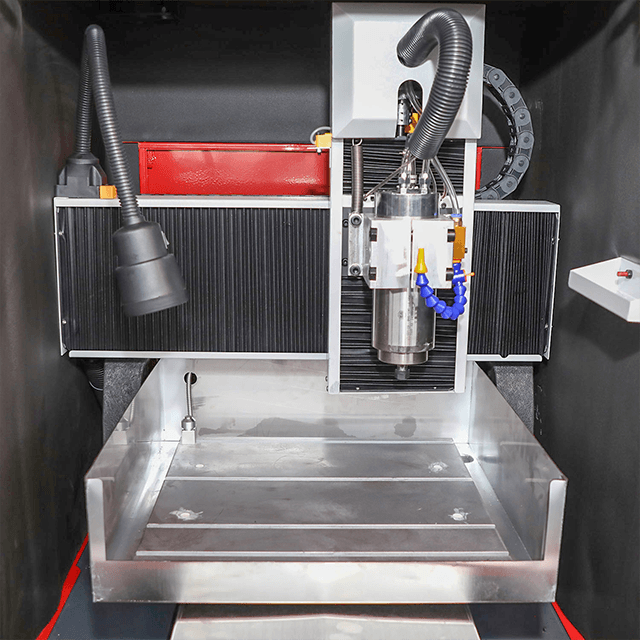
Transitioning to industrial manufacturing requires processing dense substrates. These materials push your machine's mechanical limits. Success depends entirely on rigidity, torque, and active thermal management.
Engraving non-ferrous metals is highly lucrative. A rigid 3D engraving machine excels at creating injection molds, brass stamps, or industrial serial tags. Aluminum is particularly tricky because it is "gummy." Without proper lubrication, heated aluminum chips weld directly to the carbide bit. This phenomenon is called galling.
Copper presents similar challenges. It is incredibly ductile and requires sharp, polished flutes to prevent material buildup. You must specify a minimum-quantity lubrication (MQL) system or a mist coolant setup. The mist lubricates the cutting edge and prevents chips from sticking to the flutes.
Processing minerals requires an entirely different tooling ecosystem. Operators frequently rely on a specialized CNC jade carving machine for this demanding work. You cannot cut stone dry. The extreme friction will vaporize the cutting tool and thermally shock the substrate.
The machine must feature a fully waterproofed table. It requires continuous water or flood coolant bathing the cutting zone. Furthermore, operators must use diamond-sintered burrs. These specialized tools grind away the stone slowly rather than shearing it like a traditional end mill.
You can technically engrave glass using diamond drag bits. These non-rotating bits physically scratch the surface to create frosted designs. Grinding tools also work for thicker ceramics. However, physical contact introduces massive mechanical stress. Fragile substrates often shatter under the spindle's downward pressure. For highly delicate glass, physical engraving is often less efficient than laser or waterjet alternatives.
Shop floor managers constantly debate the merits of rotary tools versus lasers. Based on real-world operator feedback, each technology dominates specific applications. You must understand their overlapping capabilities to optimize your workflow.
Rotary tools rely on physical contact. This physical engagement provides superior depth control. You can precisely mill out 3D pockets or create sloped sidewalls using V-carving bits. Rotary tools easily mill out precise pockets for hardware inserts. You cannot achieve a flat-bottomed pocket using a typical cutting laser.
Furthermore, rotary equipment safely processes PVC and polycarbonates. Lasers burn PVC, releasing highly toxic, corrosive chlorine gas. This gas destroys the machine frame and harms operators. A spindle mills PVC safely without toxic off-gassing.
Lasers excel at non-contact processing. The beam exerts zero physical pressure on the substrate. This makes lasers vastly superior for paper, thin leather, and highly fragile glass. Because there is no cutting force, you rarely need complex physical fixturing or heavy mechanical clamps. Parts stay completely still during the process.
Modern production floors rarely choose just one system. They integrate both technologies to maximize throughput. Operators use rotary spindles for deep relief carving, pocketing, and heavy dimensioning. They then transfer the part to a fiber or CO2 laser for high-speed surface marking and fine text detailing. This hybrid workflow leverages the precise strengths of both systems perfectly.
You need an actionable framework to evaluate equipment before purchasing. Do not rely solely on marketing brochures. Inspect the mechanical specifications directly to ensure material compatibility.
Material Machining Specifications Chart
| Substrate Category | Primary Challenge | Recommended Cooling | Ideal Tooling Strategy |
|---|---|---|---|
| Softwoods & MDF | Tear-out & heavy dust generation | Dry with active dust extraction | High-sharpness, single-flute carbide |
| Acrylics & Plastics | Thermal melting (chip re-welding) | Continuous compressed air blast | O-flute bits, high feed rates |
| Non-Ferrous Metals | Tool galling & chatter | Mist coolant or MQL | Rigid multi-flute carbide, coated |
| Stone & Jade | Extreme hardness & heat buildup | Continuous flood water coolant | Diamond-sintered grinding burrs |
Transitioning a new material onto your machine introduces immediate risks. You must anticipate common failure modes to protect your substrates and maintain production quality.
Machine flex ruins hard material finishes. When the spindle plows into dense brass or hardwood, the resistance pushes back against the gantry. If the gantry lacks mass, it vibrates rapidly. This vibration leaves terrible, wavy chatter marks across your workpiece. Upgrading to a heavier, cast-iron frame absorbs these vibrations naturally. Rigidity guarantees a mirror-like surface finish.
Certain metals behave aggressively if machined incorrectly. Stainless steel and some titanium alloys are prone to work-hardening. If your feed rates are too slow, the tool rubs against the metal instead of slicing it. This rubbing generates intense friction, hardening the metal surface instantly. The next pass will snap the bit against the newly hardened layer. You must maintain aggressive, deliberate feed rates to shear the material cleanly.
Never assume material compatibility based on spec sheets alone. We highly recommend demanding test cuts on your specific material. Provide the equipment vendor with your actual substrate. Request an uncut video of the process and inspect the final surface finish in person. Validate the cycle times yourself. Do this before finalizing any hardware purchase or signing an SLA with an outsourcing partner.
The substrate ultimately dictates the machine build. Soft materials allow for lighter-duty gantries and high-speed spindles. Conversely, metals and stone demand immense structural rigidity, low-end torque, and dedicated fluid cooling systems. You cannot cheat the physics of machining. Matching your equipment to your material ensures pristine finishes and extends tool life dramatically.
Audit your production floor today to identify your most frequently processed materials. Calculate the exact spindle torque and RPM specifications required for those substrates. Evaluate your facility's capacity to handle fluid coolants or heavy dust extraction. Finally, request physical sample cuts from short-listed vendors using your proprietary materials to guarantee a flawless integration.
A: A standard machine can lightly score steel surfaces using specialty diamond drag bits. However, deep milling steel requires immense structural rigidity and low-end spindle torque. Lightweight routers experience violent chatter, instantly destroying the tooling. For deep steel cutting, you need a heavy-duty machining center, not a standard router.
A: Your maximum depth depends primarily on the tool's flute length and collet clearance. If you plunge deeper than the flutes, the shank rubs against the material, causing catastrophic friction. Furthermore, high-hardness materials limit plunge depth per pass. You must clear deep cavities using multiple shallow step-downs to prevent snapping the bit.
A: Yes. Processing jade generates immense friction and requires prolonged grinding. You must use a heavily sealed, water-cooled spindle. Air-cooled spindles commonly used for wood will ingest stone dust and overheat quickly. Spindle bearings must also withstand continuous exposure to the flood coolant necessary for safe stone carving.


