


Views: 0 Author: Site Editor Publish Time: 2026-10-22 Origin: Site


Achieving precise, dimensional depth on hard materials presents a massive challenge. You want clean cuts on granite or basalt. You also want to avoid material fractures and excessive tool wear. Many operators assume pushing more power automatically yields deeper cuts. This is a costly misconception. True engraving depth relies on a delicate calculation. We must balance material density, the specific technology used, and precise operational parameters. A mechanical router behaves very differently from a laser system. This article serves as a buyer’s evaluation guide. You will learn how to match your specific depth requirements with the correct equipment architecture. We will explore material physics, machine variables, and hidden production risks. Ultimately, you will discover how to choose machinery capable of handling hard stone without constant breakdowns.
Material hardness (Mohs scale) dictates the baseline limits of your equipment; what works for slate will fail on granite.
Lasers excel at high-contrast surface marking, but true dimensional depth requires the physical material removal of a mechanical stone engraving machine.
Depth is achieved through multiple controlled passes (step-down rate), not a single high-power plunge, to preserve tooling and prevent thermal cracking.
Evaluating a machine requires looking beyond advertised wattage to assess spindle torque, Z-axis rigidity, and cooling systems.
Understanding material hardness is your first step toward successful carving. The Mohs hardness scale provides a reliable framework for this evaluation. It dictates the baseline limits of your equipment before you even load a file. Materials sit on a spectrum. They require vastly different machining approaches.
For instance, softer materials like slate and marble rank between 3 and 4 on the Mohs scale. You can carve them relatively quickly. They cause minimal tool wear. Conversely, granite and basalt rank between 6 and 8. These stones contain dense quartz and feldspar. They aggressively resist physical cutting. They demand specialized tooling and slower feed rates.
Table 1: Mohs Hardness Scale and Machining Characteristics
| Stone Type | Mohs Rating | Crystalline Structure | Machining Approach |
|---|---|---|---|
| Soapstone | 1 - 2 | Extremely soft, talc-based | Aggressive depth, fast feeds |
| Marble / Slate | 3 - 4 | Calcite-based, moderately dense | Medium depth, standard feeds |
| Granite | 6 - 7 | Quartz and feldspar, highly dense | Shallow passes, slow feeds |
| Basalt | 7 - 8 | Fine-grained volcanic rock | Very shallow passes, max torque |
Hard stones possess complex crystalline structures. These structures react violently to localized stress. When a spinning bit strikes quartz, it creates intense friction and pressure. If you push the depth limits improperly, the stone will not cut smoothly. Instead, it will fracture.
Micro-fracturing occurs when structural bonds break beyond the intended cut line. This leaves jagged edges. It ruins fine details. Pushing too deep in a single pass directly causes chipping. You must respect the granular nature of the material. Controlled, gradual material removal prevents structural failure along the carving edges.
Setting honest production timelines requires realistic depth-per-pass metrics. Operators often overestimate how deeply they can cut hard stone. You cannot plunge a bit 5mm into granite and expect success. A realistic depth-per-pass for hard granite usually sits around 0.5mm to 1mm.
This means a 10mm deep relief will require 10 to 20 separate passes. Production speed slows down accordingly. Understanding this reality helps you schedule jobs accurately. It prevents you from forcing the machine beyond its physical capabilities.
Best Practice: Always run a small test square on scrap material. Measure the edge quality after a 1mm pass. Adjust your parameters before committing to a full production run.
Selecting the right technology directly influences your final product. Many buyers confuse surface marking with dimensional carving. Understanding the mechanical differences between lasers and rotary CNCs prevents costly purchasing errors.
Laser systems rely on thermal ablation and micro-fracturing. A focused beam of light rapidly heats the stone surface. The material expands and flakes away. This process is highly precise. It requires zero physical contact.
However, the depth reality of lasers is severely limited. They remain ideal for surface-level etching. You should use them for photo-engraving and shallow text. Attempting deep relief carving with a laser causes major problems. Production times become painfully slow. The intense heat causes "glassing." Glassing means the stone literally melts and forms a brittle, uneven glassy crust. Lasers simply cannot provide consistent, deep, three-dimensional geometry on hard stone.
Mechanical CNC routers utilize physical milling. They spin diamond-tipped or solid carbide tooling at high speeds. The bit physically grinds and chips away the material. This is the mandatory choice for true dimensional carving. When you need deep, multi-layered architectural masonry, you need physical material removal.
For these demanding applications, operators rely on a dedicated stone engraving machine. These robust systems provide the torque necessary to push through dense minerals. Furthermore, a specialized relief carving machine serves as the industry standard for creating deep 3D memorials and intricate signage. These machines handle the physical resistance of granite without stalling.
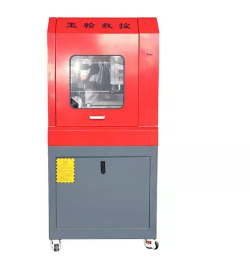
Achieving predictable depth requires synchronizing multiple machine variables. You cannot isolate one setting. They all interact during the milling process. Let's explore the four core variables you must control.
Spindle Power and Torque
Spindle architecture dictates cutting capability. Wood routers rely on high RPMs to slice soft fibers. Stone behaves differently. High RPMs on granite simply burn out the tool. Hard stone requires high torque at lower RPMs. Torque provides the rotational pushing force. It allows the bit to maintain its speed while grinding through dense quartz. A weak spindle will stall under load. You need significant torque to maintain a consistent depth without bogging down the motor.
Z-Axis Stability
The Z-axis controls the vertical plunge of your tool. Plunging into granite generates massive upward resistance. If the Z-axis lacks rigidity, the bit will deflect. Deflection causes chatter, uneven depths, and broken tools. A robust 3-axis engraving machine requires heavy-duty linear guideways. It also needs thick ball screws. These components lock the spindle securely in place. They ensure the bit stays exactly where the software tells it to be, regardless of material resistance.
Tooling Selection (Bits)
Bits do the actual work. You must select the right diamond configuration. Sintered diamond bits feature diamond particles mixed throughout the entire metal matrix. As the bit wears down, new diamonds emerge. These bits are excellent for deep, aggressive material removal. Brazed diamond bits have diamonds coated only on the outer surface. They offer sharper initial cuts. They are better suited for finer, shallower detail work. Using the wrong bit ruins both the tool and the stone.
Step-Down (Pass Depth) and Feed Rates
Step-down refers to how deep the bit plunges per pass. Feed rate is how fast it moves across the X and Y axes. These two variables share an inverse relationship. If you increase the step-down, you must decrease the feed rate. Plunging too deep while moving too fast snaps the bit instantly. Conservative step-downs yield vastly better finish quality. They also extend tool life significantly. Patience produces better results than aggressive parameters.
Common Mistake: Operators often attempt to double their production speed by doubling the step-down depth. This always leads to catastrophic tool failure and ruined workpieces.
Pushing equipment to its absolute limits introduces hidden risks. Operators focused solely on final depth often overlook the incremental damage occurring during the process. Understanding these risks protects your investment.
Deep carving generates extreme friction. Friction creates intense heat. When a diamond bit spins against granite, temperatures spike instantly. If left uncooled, the bit will turn red hot. The diamond particles will degrade. The binder matrix will melt. The tool will burn out in minutes.
Furthermore, this heat transfers into the stone. It causes thermal shock. The stone expands rapidly and cracks. Continuous, high-volume water cooling is a non-negotiable feature. It is never an optional upgrade. The cooling system must flood the cutting zone constantly. This flushes away hot debris and keeps the tool at a safe operating temperature.
Bit wear represents a constant operational reality. Deep carving on hard granite consumes tooling rapidly. Every millimeter of depth requires grinding away dense minerals. This physically degrades the cutting tool. You must maintain realistic expectations about consumable lifespan.
A single sintered bit might last for several large projects. However, improper feeds and speeds can destroy it in one hour. You must track tool usage closely. Factor this consumption into your project pricing. If you ignore bit wear, your profitability will vanish quickly.
Undersized spindles face severe risks during deep operations. When operators try to force a machine beyond its structural depth capacity, the spindle fights extreme resistance. The motor draws excess current to maintain its rotation. This causes rapid overheating inside the spindle housing.
Eventually, the motor will stall. Worse, the internal coils will burn out entirely. Replacing a burned-out spindle disrupts production for days. Always ensure your equipment possesses a spindle rated specifically for continuous stone milling.
Buying the right equipment determines your long-term success. You must look past flashy marketing specifications. Focus on the structural and functional elements necessary for heavy-duty carving. Here is what you should evaluate.
Vibration is the enemy of precision. Milling hard materials generates intense vibrations. Lightweight aluminum frames cannot absorb this energy. The vibration travels through the machine, causing chatter marks on your stone. Guide buyers to look for heavy, cast-iron frames. Thick-welded steel bases also perform exceptionally well. Mass absorbs vibration. A heavy machine stays planted. It delivers smooth, clean cuts even during deep plunging operations.
Stone dust acts like liquid sandpaper. It will destroy unprotected linear bearings and ball screws. Evaluate the machine's water basin design. Does it drain efficiently? Look closely at the pump filtration system. A good system separates heavy sludge from the coolant before recirculating it.
Additionally, check the spindle waterproofing. Spindles operating in flood-coolant environments need strict IP ratings. Water ingress will destroy spindle bearings immediately. A specialized CNC stone carving machine incorporates bellows and shields to protect delicate moving parts from abrasive slurry.
Deep carving requires complex, multi-pass 3D toolpaths. The machine controller must process massive amounts of G-code smoothly. Ensure the machine uses a reputable DSP (Digital Signal Processor) or industrial PC controller. It must integrate easily with standard CAM software like ArtCAM, Vectric, or Mastercam. Poor controller integration leads to jerky machine movements. Jerky movements break tools and ruin surface finishes.
Never buy a machine based solely on a brochure. The most crucial step is physical verification. Recommend testing a specific, deeply carved file on the manufacturer’s floor before committing to a purchase. Send them a demanding 3D relief file. Ask them to cut it into granite while you watch. This proves the true Z-axis capability. It validates spindle torque. It reveals how well the machine manages vibration under heavy loads.
Predictable engraving depth requires a synchronized process. You need the right machine architecture, proper tooling, and highly disciplined parameters. Pushing too hard or relying on the wrong technology leads to broken tools and fractured stone. Material hardness dictates everything. You must respect the Mohs scale and adjust your step-down rates accordingly.
When your core business relies on deep stone carving, prioritize structural fundamentals. Heavy cast-iron frames absorb the vibrations of deep milling. High-torque spindles maintain consistent rotation through dense granite. Effective water cooling prevents thermal failure. We advise buyers to prioritize machine rigidity and spindle torque over superficial specs. Start with conservative feeds, monitor your bit wear, and scale up your production safely.
A: While possible through hundreds of passes, it is highly inefficient and risks thermal damage to the stone. The intense heat causes "glassing" or melting of the minerals. Mechanical CNCs remain the standard for true depth.
A: Typically 1mm to 2mm per pass, depending on the bit type, spindle power, and feed rate. This conservative approach balances cutting efficiency with tool preservation. Pushing deeper increases the risk of bit breakage.
A: Yes. A standard wood or acrylic CNC lacks the frame rigidity, water cooling, and spindle torque required to handle the resistance of hard stone without failing. Stone machines utilize reinforced Z-axes to prevent deflection.
A: Tool life varies heavily based on the stone's silica content, cooling efficiency, and feed rates. Sintered bits last longer than brazed bits. Operators must track hours per bit to accurately price their deeply engraved products.


