


Views: 0 Author: Site Editor Publish Time: 2026-10-08 Origin: Site


Carving jadeite and nephrite carries inherent, unavoidable risks due to their immense value. These stones possess notoriously tough, interlocking crystalline structures. Improper stress during processing easily triggers disastrous micro-fracturing. Today, the manufacturing industry is shifting rapidly from manual craftsmanship to automated precision. But a common skepticism remains among traditionalists. Can machinery replicate intricate detailing without compromising the stone's structural integrity? Absolutely. However, achieving flawless results requires understanding how specialized equipment behaves under heavy load. You cannot treat jade like common metals or softer woods.
This article serves as a technical and operational evaluation framework. We provide practical insights for workshops and manufacturers considering a jade engraving machine. You will learn how material science dictates machine design. We will explore core dampening technologies and spindle dynamics. Finally, you will navigate the precise tooling setups required to preserve fine jade patterns perfectly.
Standard CNC routers are inadequate for jade; preserving fine patterns requires specialized rigidity, high-RPM low-runout spindles, and continuous flood cooling.
Thermal shock and vibration are the primary causes of jade chipping; proper machine selection mitigates both.
Evaluating a CNC jade carving machine requires looking beyond software to structural dampening (e.g., cast iron frames) and specific tooling compatibility (sintered diamond bits).
Implementation success depends equally on machine specs, coolant management, and operator proficiency in CAM toolpath generation.
Jade presents unique, formidable processing challenges. We must understand its dual nature fully. It registers between 6.0 and 7.0 on the Mohs hardness scale. Yet, its extreme toughness sets it apart completely from harder, more brittle stones like quartz. Jadeite features dense, interlocking crystals resisting breakage beautifully. Nephrite possesses a felted, fibrous structure making it extraordinarily resilient. This very resistance demands specialized cutting approaches.
Standard desktop routers fail catastrophically here. They generate rapid percussive vibrations during operation. These micro-vibrations transfer directly into the stone. Consequently, they cause subsurface micro-fractures invisible to the naked eye initially. Later, these fractures ruin intricate patterns during final polishing. Such damage degrades the material value entirely. You simply cannot carve jade using wood or aluminum strategies.
Therefore, you need fundamentally different structural equipment. A standard router uses lightweight aluminum extrusions bolted together. Conversely, a purpose-built relief carving machine relies on heavy mass and vibration dampening. Rigid axis stability prevents the tool from bouncing across the stone's surface. Steady, relentless pressure replaces percussive impacts. This stability preserves delicate filigree and fine relief patterns seamlessly.
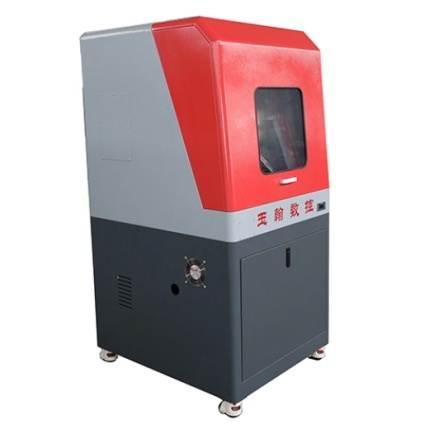
Preserving 0.1mm details requires exceptional spindle precision. Spindles must operate between 24,000 and 36,000 RPM consistently. Furthermore, they need virtually zero lateral movement, known industrially as runout. Low runout ensures the diamond bit grinds smoothly against the tough surface. If the bit wobbles even slightly, it chips the stone instead. High-frequency spindles often utilize ceramic bearings to maintain this exact precision under thermal load. They deliver the continuous grinding action necessary for clean, fracture-free cuts.
Thermal shock prevention ranks equally important in stone processing. Jade heats rapidly under intense grinding friction. Dry carving causes instant thermal cracking and ruins the piece. Even inadequate mist cooling systems fall dangerously short. You must use integrated, high-volume flood coolant systems. A steady, heavy flow of water or specialized coolant dissipates heat immediately. This flow washes away abrasive dust while stabilizing internal stone temperatures.
Finally, structural dampening absorbs harmful harmonic vibrations. Heavy cast-iron beds and solid gantry structures form the machine foundation. Cast iron possesses excellent internal graphite flakes. These flakes capture and dissipate vibrations before they reach the workpiece. Lighter steel or aluminum frames simply cannot absorb these frequencies. Cast iron delivers the deadening effect required to keep the jade perfectly still.
Selecting the right CNC jade carving machine requires evaluating specific mechanical components deeply. Drive systems heavily influence long-term production success. We must weigh the accuracy versus initial investment carefully. Closed-loop servos offer distinct, undeniable advantages. They utilize encoder feedback to monitor position constantly. This prevents missed steps during exceptionally long carving cycles. Hard stone requires continuous, lengthy processing times. A single missed step ruins the entire piece instantly.
High-precision linear guides and ballscrews ensure reliable Z-axis accuracy. You should look for reputable brands providing heavy-load capacities. Dust-proof rails maintain exact depth control over thousands of hours. This precision prevents accidental plunge damage to your intricate pattern. If rails clog with fine stone debris, the machine loses its precise positioning capabilities. Bellows and wiper seals provide necessary protection here.
Waterproofing and sludge management form the final evaluation pillar. True jade machines possess fully sealed work areas shielding critical motion components. Filtration systems manage the abrasive jade sludge efficiently. Water washes the dust into collection tanks. Without proper multi-stage filtration, this abrasive slurry destroys pumps, electronics, and moving parts quickly.
Drive System Comparison for Jade Processing Equipment
| Drive Feature | Standard Stepper Motors | Closed-Loop Servos |
|---|---|---|
| Positional Accuracy | Moderate | Extremely High |
| Risk of Missed Steps | Higher in long cycles | Virtually eliminated |
| System Feedback | Open-loop (no feedback) | Continuous encoder monitoring |
| Best Application | Soft materials, short runs | Hard stone, continuous carving |
Production goals dictate your specific machine requirements precisely. Creating 2.5D pendants and flat work demands distinct specifications. Here, you prioritize a much shorter Z-axis. A shorter axis yields higher overall structural rigidity. You also need fast X and Y rapid transit speeds. These specs optimize flat relief carving efficiently. Less Z-axis travel means less leverage for vibration to occur.
Complex sculptures and statuettes demand different capabilities entirely. They require a dedicated 3D engraving machine. Look for true 4-axis or 5-axis rotary capabilities. You must also ensure specialized CAM software compatibility. The software must handle intricate undercuts and continuous rotation seamlessly. Rotary axes allow the tool to reach all angles of the raw stone block. This prevents awkward manual repositioning.
Scalability remains a critical consideration for growing manufacturing workshops. Multi-spindle machines suit high-volume production exceptionally well. They allow simultaneous carving of identical pieces using identical toolpaths. Conversely, single-spindle, high-precision units excel at bespoke, one-off jewelry pieces. Choose your configuration based on your primary output volume and customization demands.
Three crucial steps to matching machine specifications to your goals:
Identify your primary product type to decide between flat pendants or full 360-degree sculptures.
Determine the required axis configuration, comparing standard 3-axis frames against 4-axis rotary setups.
Evaluate your production volume to choose effectively between single and multi-spindle equipment.
Purchasing the hardware represents just the first step toward automation. Ongoing operational costs primarily involve tool wear and selection. You will constantly choose between electroplated and sintered diamond burrs. Electroplated tools cost significantly less initially. However, they wear out rapidly on dense jade. Sintered diamond bits embed diamonds throughout their entire metal matrix. As they wear, fresh diamonds expose themselves. They last much longer. Using dull tools increases friction drastically. This friction risks catastrophic pattern blowout and deep thermal cracking.
You must also navigate the software learning curve transparently. A significant technical gap exists between CAD design and CAM toolpath generation. Beautiful 3D digital models only translate to jade if you calibrate settings perfectly. You must set the step-over and feed rates to match the material's specific hardness exactly. Aggressive plunge rates will snap tools and ruin expensive stones immediately. We recommend running virtual simulations before cutting.
Workholding presents another unique, complex challenge. Irregular rough jade stones resist standard mechanical clamping. You must secure the stone firmly without inducing high stress points. Excessive clamping pressure cracks the stone before carving even begins.
Practical best practices for workholding rough jade include:
Using custom-poured wax or specialized resins to encapsulate irregular stone bases securely.
Applying even, distributed pressure through soft-jaw clamps if mechanical fixturing is necessary.
Ensuring the chosen fixturing method never obstructs the heavy coolant flow.
Testing base stability with a gentle tap before initiating the high-speed spindle.
A successful equipment purchase balances several critical technical factors. You must prioritize structural rigidity, robust thermal management, and flawless spindle precision above all else. While CNC technology cannot entirely replace a master carver's artistic vision, it provides immense manufacturing value. It delivers the repeatable, risk-mitigated execution necessary to scale fine jade production securely.
Moving forward, evaluate potential machinery vendors critically. We recommend shortlisting them based on actual, verifiable performance metrics. Ask them to provide sample cuts on real, high-hardness jade. Request verifiable spindle runout data upfront before signing contracts. Finally, scrutinize their coolant system designs carefully. These actionable steps ensure your investment protects your valuable raw materials and yields pristine finished patterns.
A: Not if the machine utilizes a high-RPM spindle operating above 24,000 RPM alongside continuous water cooling. These specific elements prevent sudden thermal shock and excess vibration. Additionally, the operator must use appropriate feed rates combined with very sharp diamond tooling. Proper setup ensures the bit grinds rather than violently impacts the stone, preserving high-grade jadeite flawlessly.
A: Usually, no. Standard machines lack the heavy cast-iron rigidity required to prevent vibration during hard stone carving. Furthermore, their linear rails and delicate electronics are rarely sealed adequately. The highly abrasive water-sludge created by jade grinding quickly destroys standard, unsealed CNC components. Purpose-built frames remain absolutely necessary.
A: While basic machine operation appears straightforward, mastering the CAM software takes considerable time. Generating safe toolpaths for hard stone requires specific operational knowledge. You must set optimal plunge rates and tiny step-overs to avoid breaking tools or stone. This calibration process typically requires several weeks of trial, iteration, and practical experience.
A: Tool life depends heavily on jade density and programmed feed rates. High-quality sintered bits last longer but carry a higher upfront cost. Conversely, cheaper electroplated bits may wear out completely on a single complex relief. Using worn bits increases friction significantly, elevating the risk of pattern degradation and catastrophic heat cracking.


