


Views: 0 Author: Site Editor Publish Time: 2025-09-30 Origin: Site


Ever wondered how intricate parts are crafted with precision? Discover the power of 3-axis CNC machines. These tools revolutionize manufacturing by shaping materials with accuracy. In this post, you'll learn about their capabilities and applications across various industries.
A 3-axis CNC machine is a computer-controlled tool that moves in three directions: left to right (X-axis), front to back (Y-axis), and up and down (Z-axis). These three movements allow it to shape materials by cutting, drilling, or milling. The machine follows precise instructions from a computer program to remove material and create detailed parts.
This setup lets the machine work on flat or slightly contoured surfaces, making it ideal for many manufacturing tasks. It’s widely used because it balances complexity, cost, and precision well. For example, it can carve out engine parts, mold components, or even wood furniture pieces.
X-Axis (Horizontal Left-Right): Moves the cutting tool or workpiece sideways. This controls width-wise cutting.
Y-Axis (Horizontal Front-Back): Moves the tool or workpiece forward and backward, adding depth to the cut.
Z-Axis (Vertical Up-Down): Raises or lowers the tool to control cutting depth.
Other important parts include:
Cutting Tool: The part that actually removes material. It can be a drill, mill, or router bit.
Spindle: Holds and spins the cutting tool at various speeds.
Worktable: Secures the material in place. It can move along X and Y axes or stay fixed depending on the machine design.
Controller: The “brain” of the machine. It reads the design files and tells the motors how to move.
Drive Motors: Move the tool or table precisely along the three axes.
Together, these parts allow the machine to carve out complex shapes by moving the tool in straight lines along the three axes. The controller coordinates these movements to follow the programmed design exactly.
Because the machine moves only in three directions, it works best for parts that don’t require angled or curved cuts beyond these planes. For more complex shapes, machines with more axes (like 5-axis CNC) are used.
In a 3-axis CNC machine, the cutting tool moves along three straight directions: X (left to right), Y (front to back), and Z (up and down). These linear movements let the tool carve out shapes by cutting away material precisely from the workpiece.
X and Y axes control horizontal movement, shaping the width and depth of the part.
Z axis manages vertical movement, adjusting how deep or shallow the cut is.
The cutting tool itself spins rapidly, thanks to the spindle, which adds a rotational motion. This rotation allows the tool to slice, drill, or mill the material smoothly. The combination of spinning and moving in three directions creates detailed and accurate parts.
Though the tool moves in straight lines, it can produce curved surfaces by making many tiny, connected cuts along a curved path. This process is called interpolation and helps create smooth shapes even with just three axes of movement.
CNC machines act as the brain and muscles behind 3-axis machining. The controller reads the digital design file and sends commands to the motors that move the cutting tool precisely along the three axes.
This automation ensures:
High accuracy: The machine can follow the design exactly, down to fractions of a millimeter.
Repeatability: It can produce many identical parts without variation.
Speed: Automated movements are faster and more consistent than manual machining.
The precision of 3-axis CNC machines makes them ideal for producing parts that require tight tolerances, such as engine components or medical devices.
However, since the tool only moves in three directions, some complex shapes with angled or undercut features need more advanced machines with extra axes.
Note: When designing parts for 3-axis machining, keep in mind the tool's straight-line movement and rotational cutting to optimize accuracy and reduce machining time.
3-axis CNC machines come in several types, each designed for specific tasks and materials. They all move the cutting tool or workpiece along the X, Y, and Z axes but differ in features and applications. Here’s a closer look at the common types:
These are the most common type. They move the cutting tool across the three axes to shape flat or slightly contoured parts. Milling machines are versatile, working on metals, plastics, and wood. They excel in producing parts with slots, holes, and flat surfaces. However, they are limited in cutting complex curves unless paired with special rotary tables.
Machining centers are advanced milling machines. They combine milling, drilling, and tapping capabilities, often including an automatic tool changer (ATC). This makes them ideal for high-volume production of complex parts. They offer more flexibility than basic milling machines but require skilled operators and higher investment.
Lathes rotate the workpiece while the cutting tool moves along the three axes. This setup is perfect for cylindrical parts such as shafts, bushings, and pulleys. With live tooling, 3-axis CNC lathes can also mill and drill, offering multi-process capabilities. They are efficient for round parts but not suitable for flat or irregular shapes.
Routers are designed mainly for woodworking but also handle plastics, foam, and softer metals like aluminum. They move the cutting tool along the three axes to carve, cut, or shape materials. CNC routers are popular in furniture making, signage, and decorative arts. They offer high speed and large working areas but are less precise than milling machines for hard metals.
These machines specialize in engraving detailed designs onto surfaces. They use small cutting tools and precise movements along the three axes to carve text, logos, or patterns. Engraving machines work on metals, plastics, and wood, and are common in jewelry making, awards, and custom signage.
Plasma cutters use a high-temperature plasma jet to cut through conductive metals. In a 3-axis setup, the plasma torch moves left-right, forward-back, and up-down to slice flat metal sheets. They are fast and effective for thick materials but less precise than milling or routing machines. Safety precautions are essential due to fumes and sparks.
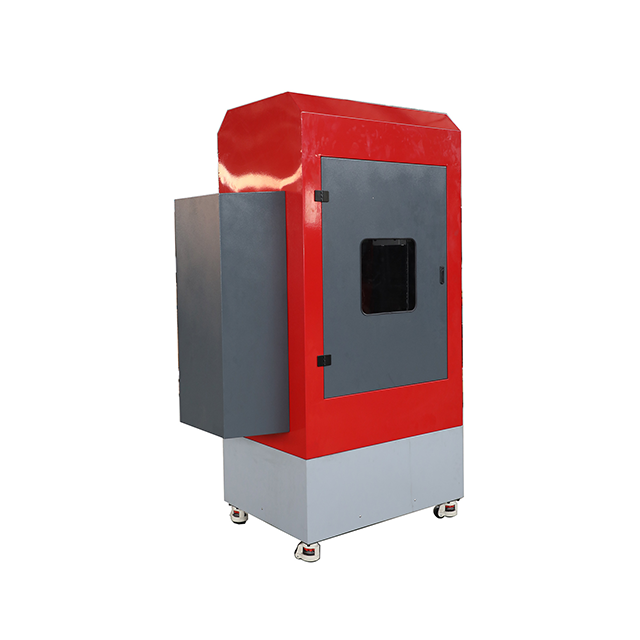
3-axis CNC machines are versatile tools used across many industries. Their precision and ability to work with various materials make them valuable for manufacturing parts and components efficiently. Here’s a look at some key industries and how they benefit from 3-axis CNC machining.
In the automotive sector, 3-axis CNC machines produce engine parts, gearboxes, and custom components. Their accuracy helps create parts that fit perfectly and perform reliably. For example, they can mill cylinder heads or carve molds for plastic car parts. This speeds up production and ensures consistent quality.
Aerospace demands high precision for safety and performance. 3-axis CNC machines make turbine blades, instrument panels, and airframe components from metals like aluminum and titanium. They help maintain tight tolerances crucial for aerodynamic efficiency and structural integrity. This machining process supports both prototyping and full-scale production.
Medical devices require exact shapes and smooth finishes. 3-axis CNC machining is ideal for orthopedic implants, surgical tools, and dental prosthetics. It can work with biocompatible materials such as stainless steel and medical-grade plastics. The machines’ repeatability ensures each part meets strict regulatory standards for safety.
The electronics industry uses 3-axis CNC machines to craft circuit boards, enclosures, and heat sinks. These parts often need precise holes and slots for components. The machines handle plastics and metals alike, producing parts that fit perfectly in devices like smartphones and computers.
Mold and die making involves shaping metal to form molds for casting or injection molding. 3-axis CNC machines create flat or slightly contoured mold surfaces with great accuracy. This helps manufacturers produce parts with consistent shapes and smooth finishes. The technology reduces lead times and material waste during mold production.
For jewelry, 3-axis CNC machines engrave detailed patterns and cut intricate shapes in metals and precious materials. In woodworking, CNC routers carve furniture parts, decorative panels, and custom designs. The machines offer speed and repeatability, allowing artisans to produce complex designs efficiently.
Tip: When selecting a 3-axis CNC machine for your application, consider the material type, part complexity, and production volume to maximize efficiency and cost-effectiveness.
3-axis CNC machines offer several advantages that make them a popular choice across many industries. Their design allows for precise control and automation, which leads to better quality parts and improved production efficiency. Let’s explore the key benefits:
One of the biggest strengths of 3-axis CNC machines is their accuracy. They move the cutting tool precisely along the X, Y, and Z axes, following programmed instructions down to tiny fractions of a millimeter. This precision helps produce parts that fit perfectly and meet strict tolerances.
Besides accuracy, these machines are versatile. They can work on a variety of materials such as metals, plastics, and wood. Whether you need to cut flat surfaces, drill holes, or mill slots, 3-axis machines handle these tasks well. They also support different cutting tools, allowing you to switch between drilling, milling, and engraving without changing machines.
3-axis CNC machines are computer-controlled, so they automate many manual tasks. This automation reduces human error and speeds up production. Once programmed, the machine can run continuously, producing consistent parts without needing constant supervision.
Automation also means less labor cost and higher throughput. Manufacturers can produce more parts in less time, meeting tight deadlines and increasing overall productivity. Additionally, CNC machines operate with consistent speed and feed rates, optimizing cutting conditions and reducing tool wear.
Compared to more complex CNC machines, 3-axis models are generally more affordable to buy and maintain. They offer a great balance between capability and cost, making them ideal for small to medium production runs.
Because of their precision, these machines minimize material waste. Accurate cuts mean fewer mistakes and less scrap. This efficiency saves money on raw materials and reduces environmental impact. Also, the ability to automate processes lowers costs related to labor and rework.
Tip: To maximize the benefits of a 3-axis CNC machine, design parts with simple geometries and plan tool paths carefully for faster, more cost-effective production.
While 3-axis CNC machines offer many advantages, they come with certain drawbacks and limitations that manufacturers should consider before choosing them for a project.
The main limitation of 3-axis CNC machines lies in their restricted movement. They operate only along the X, Y, and Z linear axes, which means the cutting tool or workpiece cannot rotate or tilt. This restriction limits the complexity of parts they can produce.
Limited Geometry: Complex shapes requiring angled cuts, undercuts, or curved surfaces beyond simple contours are difficult or impossible to machine in a single setup.
Multiple Setups Required: To achieve more complex geometries, manufacturers often need to reposition the workpiece multiple times. This increases the chance of misalignment and errors.
Inability to Machine Undercuts: Features like internal grooves or overhangs that require tool access from different angles are challenging for 3-axis machines.
For example, aerospace parts with intricate aerodynamic surfaces or medical implants with complex curves usually need machines with more axes (like 5-axis CNC) for efficient production.
Setting up a 3-axis CNC machine can be time-consuming, especially for parts requiring multiple operations or setups.
Manual Repositioning: Since the machine can't rotate the part, operators must manually reposition or remount the workpiece to machine different faces. This adds to setup time.
Calibration and Alignment: Each new setup requires precise calibration to maintain accuracy, increasing labor costs and potential for errors.
Longer Production Cycles: More setups translate to longer overall machining times, which can delay delivery schedules.
While 3-axis machines are generally less expensive than machines with more axes, these additional setup times and labor costs can reduce their cost-effectiveness for complex parts.
The main difference between 3-axis and 5-axis CNC machines lies in how many directions the tool or workpiece can move. A 3-axis machine operates along three straight linear axes: X (left-right), Y (front-back), and Z (up-down). This setup allows it to cut flat surfaces and simple contours effectively.
A 5-axis machine adds two rotational axes, often called A and B, which let the tool or the workpiece tilt and rotate. This extra movement enables machining of complex shapes, including angled cuts, undercuts, and curved surfaces, all in a single setup. For example:
3-axis machines work best on parts with flat or mildly contoured surfaces.
5-axis machines can handle intricate aerospace components, medical implants, or molds with complex geometries.
The ability to approach the workpiece from multiple angles reduces the need for repositioning and multiple setups, improving accuracy and saving time on complex parts.
While 5-axis CNC machines offer more flexibility, they come with higher costs:
Initial investment: 5-axis machines are significantly more expensive to purchase due to their advanced mechanics and controls.
Maintenance: More moving parts mean higher maintenance costs.
Training: Operating and programming 5-axis machines requires specialized skills. Operators must understand complex toolpaths and machine kinematics, which means longer training and more potential for programming errors.
In contrast, 3-axis machines are more affordable and easier to program. Their simpler design means less downtime and lower operating costs. For many manufacturers, this makes 3-axis machining the more practical choice, especially for parts that don’t require complex angles or features.
Choose 3-axis CNC machining if your parts have simple geometries, flat surfaces, or you need cost-effective production with shorter lead times.
Opt for 5-axis machining when your parts demand complex shapes, high precision on multiple faces, or you want to reduce manual repositioning and setups.
Understanding these differences helps you select the right machine for your project’s complexity, budget, and timeline.
A 3-axis CNC machine is a versatile tool that excels in precision and efficiency for manufacturing flat or slightly contoured parts. It is ideal for various industries, including automotive, aerospace, and electronics. When choosing the right machining solution, consider the complexity of your parts and production needs. For simpler geometries, 3-axis machines offer cost-effective production. Anhui Yuhan Numerical Control Technology Co., Ltd. provides advanced CNC machines that ensure accuracy and efficiency, delivering exceptional value to your manufacturing processes.
A: A 3-axis CNC machine is a computer-controlled tool that moves in three directions: X, Y, and Z axes, allowing it to shape materials by cutting, drilling, or milling.
A: It moves the cutting tool along the X, Y, and Z axes, following programmed instructions to carve out precise shapes from the workpiece.
A: It offers a balance of complexity, cost, and precision, ideal for producing parts with flat or slightly contoured surfaces efficiently.
A: Benefits include high accuracy, versatility across materials, automation for efficiency, and cost-effectiveness in production.
A: A 3-axis machine is simpler and more affordable, best for flat surfaces, while a 5-axis machine handles complex shapes with more precision and flexibility.


