


Views: 0 Author: Site Editor Publish Time: 2025-10-21 Origin: Site


The evolution of CNC machines has transformed manufacturing, enabling precision and efficiency in complex tasks. A critical aspect of CNC machines is the number of axes they possess, which determines their capability to perform intricate operations. This article delves into the intricacies of CNC machines, exploring the differences between 3-Axis, 4-Axis, and beyond, while providing insights into their applications and benefits. For those interested in exploring various CNC machine options, the CNC machine page offers a comprehensive overview.
CNC machines operate on a coordinate system, with each axis representing a direction of movement. The X, Y, and Z axes are standard in most machines, allowing for three-dimensional movement. However, additional axes, such as A, B, and C, enable rotational capabilities, enhancing the machine's ability to handle complex geometries. The number of axes directly impacts the machine's versatility and the complexity of tasks it can perform.
The 3-Axis CNC machine is the most common and is often used for tasks that require movement along the X, Y, and Z axes. These machines are ideal for simple tasks like drilling, milling, and cutting flat surfaces. They are widely used in industries where precision and speed are crucial, such as in the production of parts for electronics and automotive components. Despite their limitations in handling complex shapes, they remain a staple in many manufacturing environments due to their efficiency and cost-effectiveness.
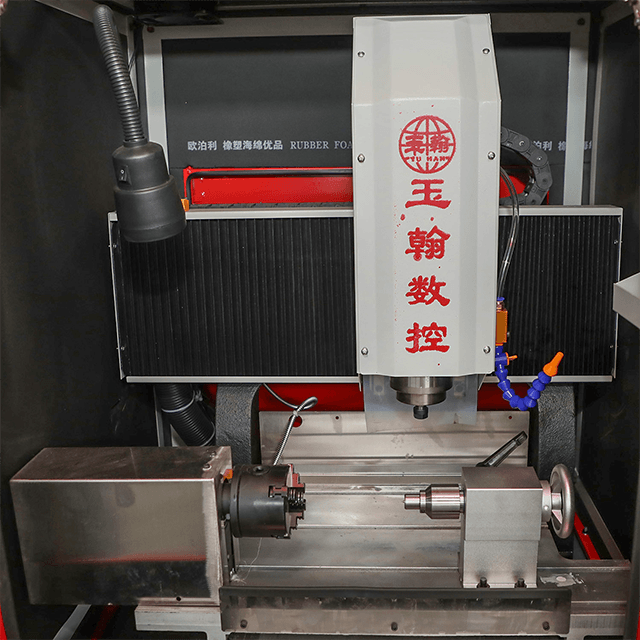
Adding a fourth axis, typically a rotational axis, allows the machine to perform more complex tasks, such as machining on multiple sides of a workpiece without manual repositioning. The 4-Axis Engraving Machine is particularly useful in industries that require detailed work on cylindrical objects, such as engraving and relief carving. This capability significantly reduces production time and increases precision, making it a valuable asset in sectors like aerospace and automotive manufacturing.
5-Axis CNC machines incorporate two additional rotational axes, allowing for even greater flexibility and precision. These machines are capable of producing complex shapes and surfaces, making them indispensable in industries like aerospace, where intricate components are required. The ability to machine parts from multiple angles without repositioning enhances accuracy and reduces production time. Some advanced CNC machines offer even more axes, providing unparalleled capabilities for specialized applications.
Multi-axis CNC machines are employed across various industries, each benefiting from the enhanced capabilities these machines offer. In the aerospace industry, for instance, the production of turbine blades and complex components is made possible through the use of 5-axis machines. Similarly, in the automotive sector, these machines are used to produce intricate parts that require high precision and consistency.
The aerospace industry demands high precision and reliability in component manufacturing. A 5-axis CNC machine can produce complex parts like turbine blades with exceptional accuracy. By utilizing a spiral machining process, these machines can efficiently create freeform surfaces, ensuring optimal performance and safety in aerospace applications. The ability to machine complex geometries without repositioning the workpiece reduces the risk of errors and enhances the overall quality of the components.
In the automotive industry, the demand for lightweight and high-strength components has led to the adoption of multi-axis CNC machines. These machines enable the production of complex parts, such as engine components and structural elements, with high precision and repeatability. The ability to machine intricate shapes and surfaces enhances the performance and efficiency of automotive vehicles, contributing to advancements in fuel efficiency and safety.
The primary advantage of multi-axis CNC machines lies in their ability to perform complex machining tasks with high precision and efficiency. By reducing the need for manual repositioning, these machines minimize the risk of errors and enhance the overall quality of the finished product. Additionally, the ability to machine parts from multiple angles reduces production time and increases throughput, making them a cost-effective solution for high-volume manufacturing.
Multi-axis CNC machines offer unparalleled precision and accuracy, making them ideal for industries where quality is paramount. The ability to machine complex shapes and surfaces with minimal error enhances the performance and reliability of the final product. This precision is particularly important in industries like aerospace and medical device manufacturing, where even minor deviations can have significant consequences.
By reducing the need for manual intervention and repositioning, multi-axis CNC machines significantly increase efficiency and productivity. The ability to perform multiple operations in a single setup reduces production time and labor costs, making these machines a valuable asset in high-volume manufacturing environments. This increased efficiency translates to faster turnaround times and improved competitiveness in the market.
Despite their advantages, multi-axis CNC machines also present certain challenges and considerations. The complexity of these machines requires skilled operators and programmers to ensure optimal performance. Additionally, the initial investment cost for multi-axis machines can be significant, necessitating careful consideration of the potential return on investment. Maintenance and upkeep are also critical to ensuring the longevity and reliability of these machines.
The complexity of multi-axis CNC machines necessitates a high level of expertise from operators and programmers. Proper training is essential to ensure that these machines are used to their full potential, minimizing the risk of errors and maximizing efficiency. Ongoing education and training programs are crucial to keeping operators up-to-date with the latest advancements and techniques in CNC machining.
The initial investment cost for multi-axis CNC machines can be substantial, requiring careful consideration of the potential return on investment. Businesses must weigh the benefits of increased precision and efficiency against the cost of acquisition and maintenance. However, for industries where precision and complexity are critical, the investment in multi-axis CNC machines can yield significant long-term benefits.
In conclusion, the number of axes in a CNC machine plays a crucial role in determining its capabilities and applications. From the basic 3-Axis Engraving Machine to the advanced 5-axis and beyond, each configuration offers unique advantages and challenges. Understanding the specific needs of your industry and application is essential in selecting the right CNC machine.
1. What is the primary difference between a 3-axis and a 4-axis CNC machine?
The primary difference lies in the addition of a rotational axis in 4-axis machines, allowing for more complex machining operations without manual repositioning.
2. How does a 5-axis CNC machine enhance manufacturing capabilities?
A 5-axis CNC machine provides two additional rotational axes, enabling the machining of complex shapes and surfaces from multiple angles, enhancing precision and efficiency.
3. What industries benefit most from multi-axis CNC machines?
Industries such as aerospace, automotive, and medical device manufacturing benefit significantly from the precision and efficiency offered by multi-axis CNC machines.
4. Are there any challenges associated with operating multi-axis CNC machines?
Yes, the complexity of these machines requires skilled operators and programmers, and the initial investment cost can be significant.
5. How does operator training impact the performance of CNC machines?
Proper training ensures that operators can maximize the potential of CNC machines, minimizing errors and enhancing efficiency.
6. What factors should be considered when investing in a multi-axis CNC machine?
Businesses should consider the potential return on investment, the specific needs of their industry, and the cost of acquisition and maintenance.
7. Can multi-axis CNC machines improve production time?
Yes, by reducing the need for manual repositioning and allowing for multiple operations in a single setup, these machines significantly improve production time and efficiency.


