


Views: 0 Author: Site Editor Publish Time: 2025-10-14 Origin: Site


In the realm of CNC machining, understanding the differences between 4-axis and 5-axis CNC machines is crucial for manufacturers and engineers. These machines play a pivotal role in the production of complex parts with high precision. This article delves into the intricacies of 4-axis and 5-axis CNC machines, exploring their functionalities, applications, and the technological advancements that distinguish them. For those interested in exploring various CNC machines, including the 4-Axis Engraving Machine, understanding these differences is essential.
CNC (Computer Numerical Control) machining is a manufacturing process where pre-programmed computer software dictates the movement of factory tools and machinery. The process can control a range of complex machinery, from grinders and lathes to mills and routers. With CNC machining, three-dimensional cutting tasks can be accomplished in a single set of prompts.
The technology has evolved significantly over the years, transitioning from basic 3-axis machines to more advanced 4-axis and 5-axis machines. The primary difference lies in the number of directions in which the cutting tool can move. This capability is crucial for producing intricate and precise parts, particularly in industries such as aerospace, automotive, and medical devices.
A 4-axis CNC machine operates on the X, Y, and Z axes, similar to a 3-axis machine, but it also includes a rotational movement around the X-axis, referred to as the A-axis. This additional axis allows the machine to perform tasks such as engraving on cylindrical surfaces and creating more complex shapes. The 4 Axis CNC Router is an example of such machinery, offering enhanced capabilities over traditional 3-axis machines.
The 4-axis CNC machine is particularly useful for operations that require continuous cutting around a workpiece. This includes tasks such as carving intricate designs on furniture or creating detailed patterns on metal components. The ability to work on multiple sides of a part without manual repositioning significantly reduces production time and increases efficiency.
The applications of 4-axis CNC machines are diverse, spanning various industries. In the woodworking sector, these machines are used to create detailed carvings and engravings on furniture pieces. In metalworking, they are employed to produce complex components for machinery and equipment. The flexibility and precision offered by 4-axis machining make it an ideal choice for manufacturers looking to enhance their production capabilities.
Moreover, the 4 Axis CNC Controller is a critical component that ensures precise control over the machine's operations, enabling manufacturers to achieve high levels of accuracy and repeatability in their production processes.
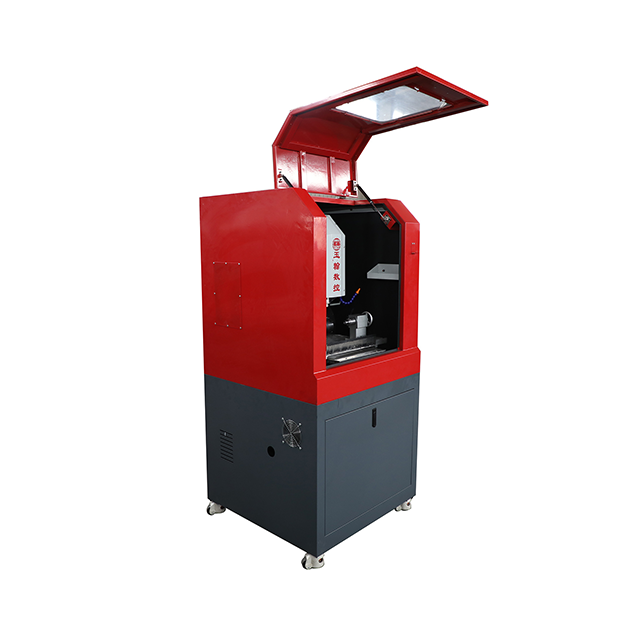
5-axis CNC machines take the capabilities of 4-axis machines a step further by adding a fifth axis of rotation. This additional axis can be around the Y-axis (B-axis) or the Z-axis (C-axis), allowing the cutting tool to approach the workpiece from virtually any direction. This flexibility is crucial for producing complex geometries and intricate designs that would be impossible with fewer axes.
The primary advantage of 5-axis machining is its ability to produce parts with complex shapes in a single setup, reducing the need for multiple fixtures and setups. This not only saves time but also enhances the precision and quality of the finished product. Industries such as aerospace and automotive heavily rely on 5-axis machining to produce components with tight tolerances and complex geometries.
5-axis CNC machines are indispensable in industries that require high precision and complex part geometries. In aerospace, these machines are used to manufacture turbine blades, impellers, and other critical components that demand intricate designs and tight tolerances. In the medical field, 5-axis machining is employed to produce implants and prosthetics with complex shapes and precise dimensions.
Additionally, the automotive industry benefits from 5-axis machining for the production of engine components, transmission parts, and other critical elements that require high precision and durability. The ability to machine complex shapes in a single setup reduces production time and costs, making 5-axis CNC machines a valuable asset for manufacturers.
The evolution of CNC machining technology has been marked by significant advancements in software, hardware, and control systems. Modern CNC machines are equipped with sophisticated software that allows for complex programming and simulation, enabling manufacturers to optimize their production processes and reduce errors.
Hardware advancements have also played a crucial role in enhancing the capabilities of CNC machines. High-speed spindles, advanced tooling systems, and precision control mechanisms have improved the accuracy and efficiency of CNC machining. The integration of IoT and Industry 4.0 technologies has further revolutionized the field, enabling real-time monitoring and data analysis to optimize production processes.
Software plays a pivotal role in CNC machining, providing the necessary tools for programming, simulation, and optimization. Advanced CAD/CAM software allows engineers to design complex parts and generate toolpaths that optimize machining operations. Simulation tools enable manufacturers to visualize the machining process and identify potential issues before production begins.
Moreover, the integration of artificial intelligence and machine learning in CNC software has opened new possibilities for predictive maintenance, process optimization, and quality control. These technologies enable manufacturers to enhance their production capabilities and achieve higher levels of efficiency and precision.
In conclusion, the differences between 4-axis and 5-axis CNC machines lie in their capabilities, applications, and technological advancements. While 4-axis machines offer enhanced flexibility and efficiency for a wide range of applications, 5-axis machines provide unparalleled precision and complexity for industries that demand high precision and intricate designs. For those interested in exploring the capabilities of CNC machines, understanding these differences is essential. The advancements in CNC technology continue to drive innovation and efficiency in manufacturing, enabling companies to produce high-quality parts with greater speed and accuracy.
1. What is the primary difference between 4-axis and 5-axis CNC machines?
The primary difference lies in the number of axes of rotation. A 4-axis CNC machine includes an additional rotational axis (A-axis) around the X-axis, while a 5-axis machine adds a fifth axis of rotation, either around the Y-axis (B-axis) or the Z-axis (C-axis).
2. What are the advantages of using a 5-axis CNC machine?
5-axis CNC machines offer the ability to produce complex geometries in a single setup, reducing the need for multiple fixtures and setups. This enhances precision, reduces production time, and allows for the creation of intricate designs.
3. In which industries are 5-axis CNC machines commonly used?
5-axis CNC machines are commonly used in aerospace, automotive, and medical industries, where high precision and complex part geometries are required.
4. How does software impact CNC machining?
Software plays a crucial role in CNC machining by providing tools for programming, simulation, and optimization. Advanced software enables the design of complex parts and the generation of optimized toolpaths.
5. What technological advancements have impacted CNC machining?
Technological advancements in software, hardware, and control systems have significantly impacted CNC machining. The integration of IoT and Industry 4.0 technologies has enabled real-time monitoring and data analysis to optimize production processes.
6. What is the role of the 4 Axis CNC Controller?
The 4 Axis CNC Controller is essential for precise control over the machine's operations, ensuring high levels of accuracy and repeatability in production processes.
7. Can 4-axis CNC machines be used for complex designs?
Yes, 4-axis CNC machines can be used for complex designs, particularly those involving cylindrical surfaces and intricate patterns. They offer enhanced flexibility and efficiency for a wide range of applications.


